Muse Spark 1.1 is not the most powerful coding model you can buy today. I'm telling you that at the outset because everything else here only makes sense once you accept it.
What Meta's Muse Spark 1.1 actually does is more interesting than raw power: it closes the performance gap to the frontier models fast enough that the remaining gap no longer justifies the cost difference. For founders and product teams who have been burned by surprise maintenance bills, or who tried to learn to code their own app and found it ate six months of their life, or who genuinely cannot tell how many developers they need or how long a first version should take, that shift in the cost curve is the thing worth paying attention to.
Muse Spark 1.1 landed on 9 July 2026 via the Meta Model API in public preview, and it is also available in Thinking mode inside the Meta AI app and website. (source)
Artificial Analysis scores it at 51 on its Intelligence Index, up 8 points from 43 in the previous version. (source) To give that number some context: Grok 4.5 sits at 54, Claude Opus 4.8 at 56, GPT-5.6 Sol at 59, and Claude Fable 5 at 60. Muse Spark 1.1 ties GLM-5.2 (max), GPT-5.4 (xhigh), and GPT-5.6 Luna (max) at that same 51 mark.
On Humanity's Last Exam, it scores 45%. Claude Opus 4.8 is at 46%, GPT-5.5 at 44%, Grok 4.5 at 40%. In other words, on genuinely difficult reasoning tasks, Muse Spark 1.1 is sitting shoulder-to-shoulder with models that cost considerably more to run.
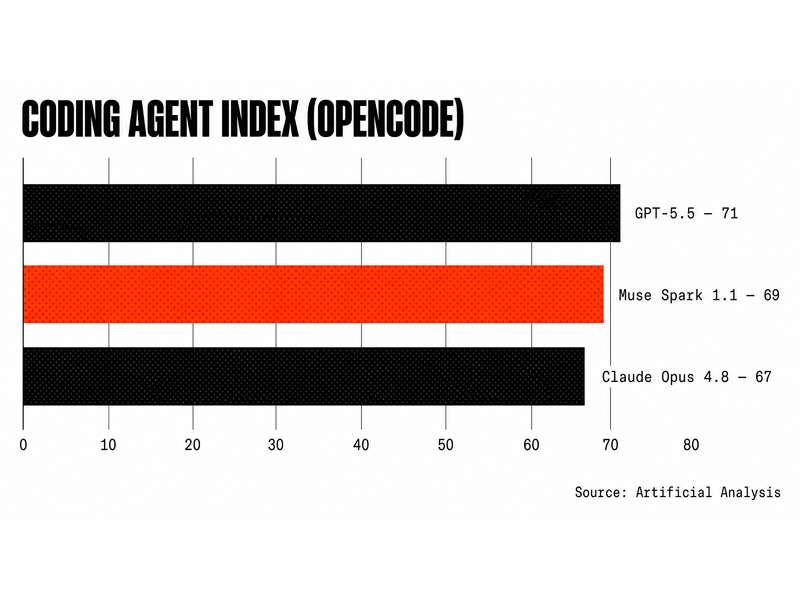
The coding story is similar. On the Coding Agent Index in Opencode, it scores 69. GPT-5.5 is at 71, Claude Opus 4.8 at 67. It is not leading, but it is not trailing either, and it is priced far below both.
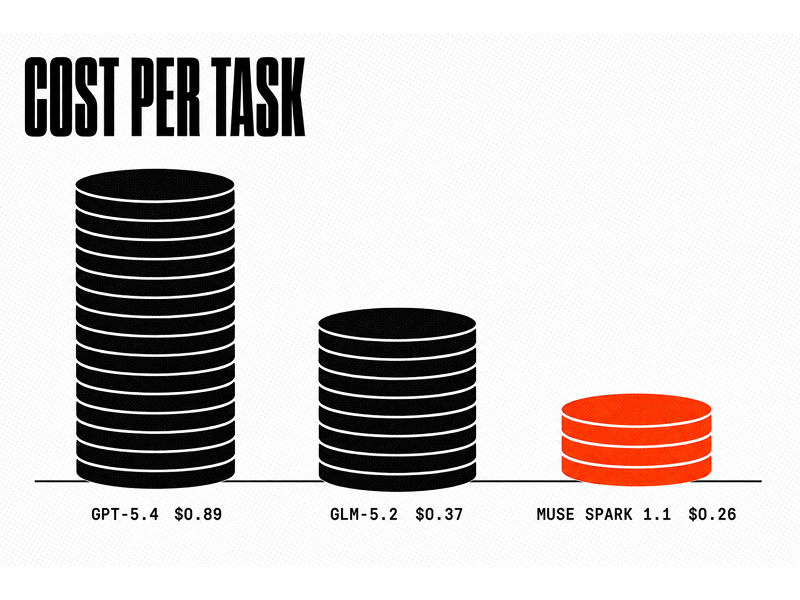
A coding task costs roughly $1.40 with Muse Spark 1.1. Compare that to GPT-5.4 at $0.89 per Intelligence Index task versus $0.26 for Muse Spark 1.1. GLM-5.2 comes in at $0.37 for a reasoning task. Across the broader pricing structure, Muse Spark 1.1 is $1.25 per million input tokens and $4.25 per million output tokens, with cached input at $0.15.
That last figure matters more than it might seem. The model uses roughly 94 million output tokens per benchmark, compared to GPT-5.4 at 109M, GPT-5.6 Luna at 125M, and GLM-5.2 at 141M. It is not just cheaper per token. It also spends fewer tokens reaching its answers. Fewer tokens at a lower unit price is how you get unit economics that hold up in production, not just in a demo.
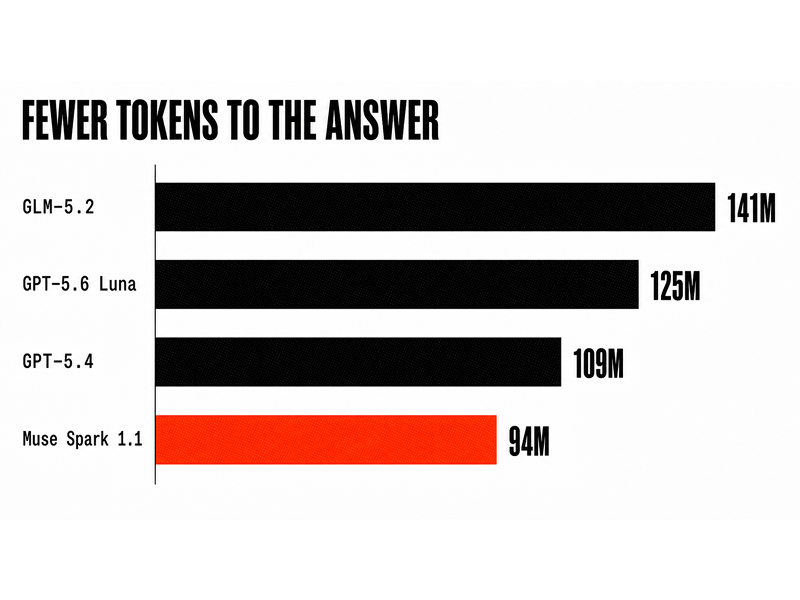
In my view, this is the shift that makes Muse Spark 1.1 worth taking seriously for anyone building AI-assisted products at real scale. I think of it the way I think about an efficient algorithm: a solution that uses less compute to reach the right answer is strictly better, all else being equal.
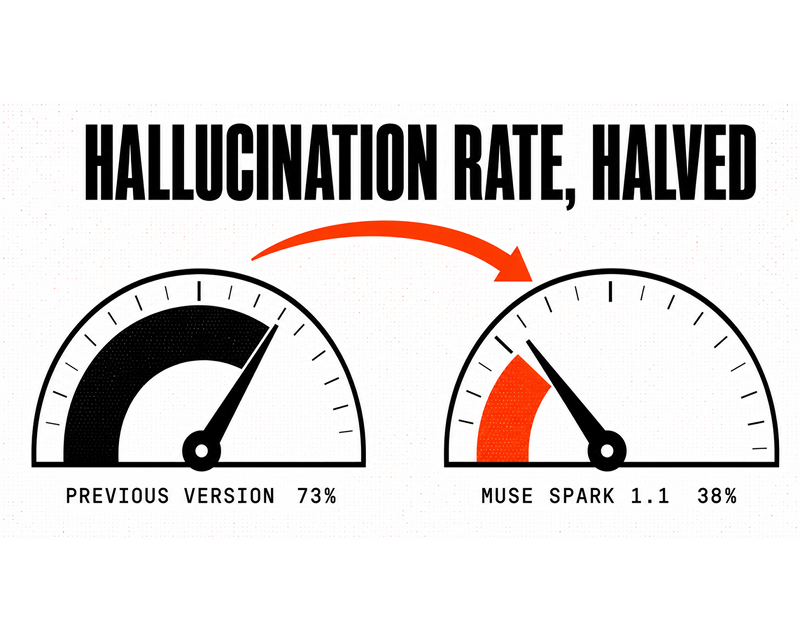
The previous version's hallucination rate was 73%. Muse Spark 1.1 brings that down to 38%. The AA-Omniscience score went from 4 to 18. Attempt rate rose to 82% while accuracy shifted slightly from 45% to 41%, which suggests the model is more willing to attempt hard problems while staying roughly as accurate on the ones it tries.
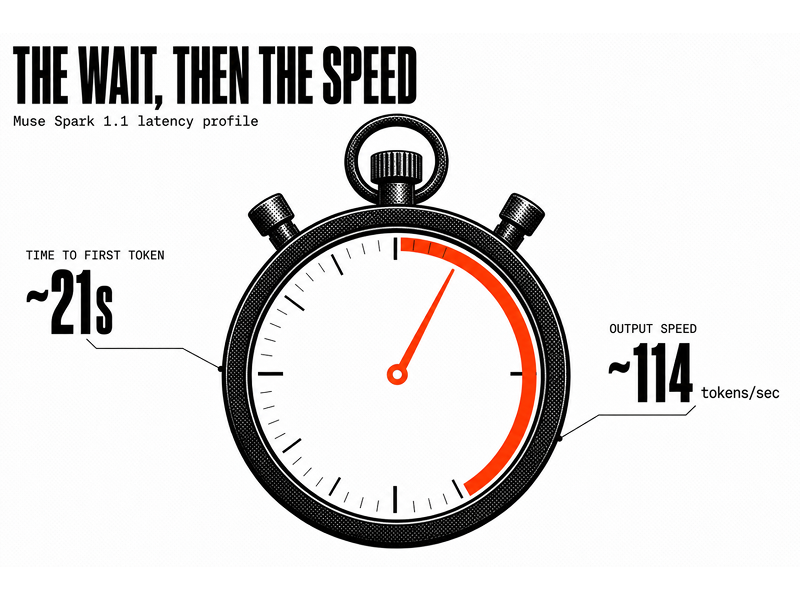
There is a latency tradeoff worth naming: output speed is around 114 tokens per second, and time to first token is approximately 21 seconds. For interactive use cases where someone is staring at a cursor waiting for a response, that delay is noticeable. For agentic coding workflows where a model is running in the background across many tasks, it matters much less.
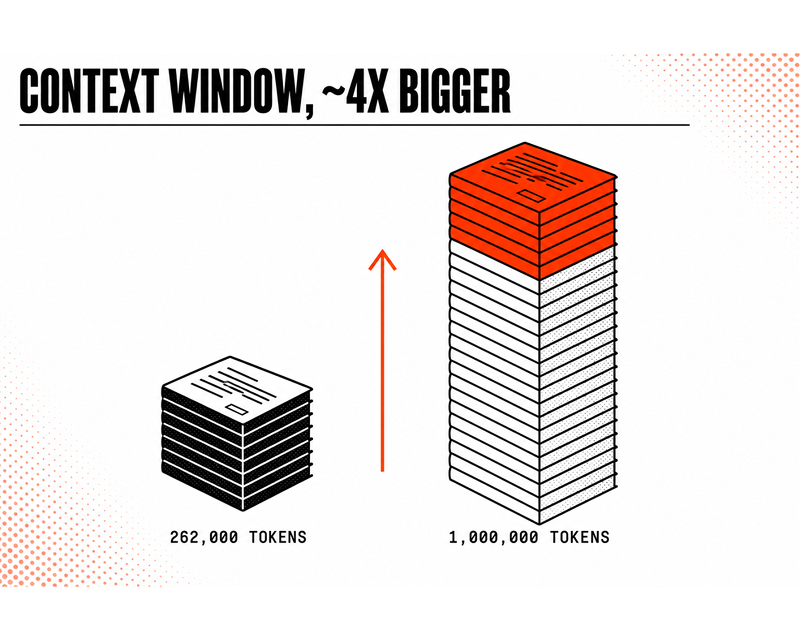
The context window jumped from 262,000 to 1 million tokens. For long codebases, extended reasoning chains, or anything that benefits from holding a large amount of context in a single pass, that is a meaningful practical change.
For all the founders trying to get a scalable custom product built without signing up for surprise maintenance fees or a six-month agency engagement, the recurring problem has been the same: frontier-quality AI assistance came with frontier pricing, and the maths broke down fast once you moved from prototype to production.
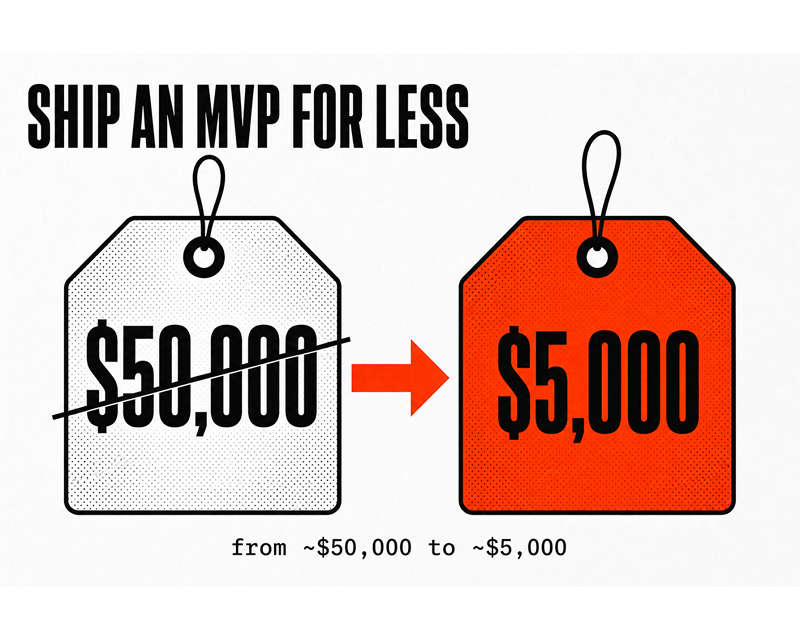
Muse Spark 1.1 does not eliminate that problem entirely, but it does shift the equation. A model that scores 69 on the Coding Agent Index, halved its hallucination rate, and costs $1.40 per coding task is genuinely viable as the backbone of an AI-assisted development workflow at the kind of budgets founders actually work with, say, wanting to ship an MVP for around $5,000 rather than $50,000.
The models that still beat it on raw intelligence scores are real, and for some tasks they will be worth the extra spend. But the performance gap is now narrow enough that most practical coding and reasoning tasks do not require paying for the top of the table.
Sources:
What is Meta's Muse Spark 1.1 and why does it matter for builders on a budget? Muse Spark 1.1 is Meta's latest reasoning and coding model, scored at 51 on the Artificial Analysis Intelligence Index with a Coding Agent Index score of 69 in Opencode. It sits close to frontier models on performance while costing roughly $0.26 per reasoning task, which makes production-scale AI development economics viable for smaller teams.
How does Muse Spark 1.1 compare to GPT-5 and Claude on coding? On the Coding Agent Index, it scores 69 against GPT-5.5's 71 and Claude Opus 4.8's 67, so the performance gap is narrow. The cost difference is larger: Muse Spark 1.1 is priced at $1.25/$4.25 per million tokens, substantially below GPT-5.4's effective cost per task.
Is the hallucination rate actually improved? Yes. The hallucination rate fell from 73% in the previous version to 38% in Muse Spark 1.1, and the AA-Omniscience score rose from 4 to 18. It is a meaningful reliability improvement, though a 38% rate still warrants human review on high-stakes outputs.
What is the catch with latency? Time to first token is around 21 seconds, which is slow for interactive use. For background agentic workflows and batch coding tasks, it is far less of an issue.
Where can I access Muse Spark 1.1? It is available via the Meta Model API in public preview and in Thinking mode within the Meta AI app and website, as of 9 July 2026.
TL;DR
What is Meta's Muse Spark 1.1 and why does it matter for builders on a budget? It is Meta's latest coding and reasoning model that sits close to the most powerful AI models on performance but costs roughly $0.26 per reasoning task, making production-scale AI development affordable for smaller teams.
How does it compare to GPT-5 and Claude on coding? On the Coding Agent Index it scores 69, against GPT-5.5's 71 and Claude Opus 4.8's 67, so the performance gap is narrow while the cost difference is significantly larger.
Is the hallucination rate actually improved? Yes, it dropped from 73% in the previous version to 38%, a meaningful reliability gain, though human review is still wise on high-stakes outputs.
What is the catch with response speed? Time to first response is around 21 seconds, noticeable if someone is waiting at a screen, but far less of a problem for background or batch coding workflows.
Where can I access Muse Spark 1.1? Via the Meta Model API in public preview and in Thinking mode inside the Meta AI app and website, available from 9 July 2026.