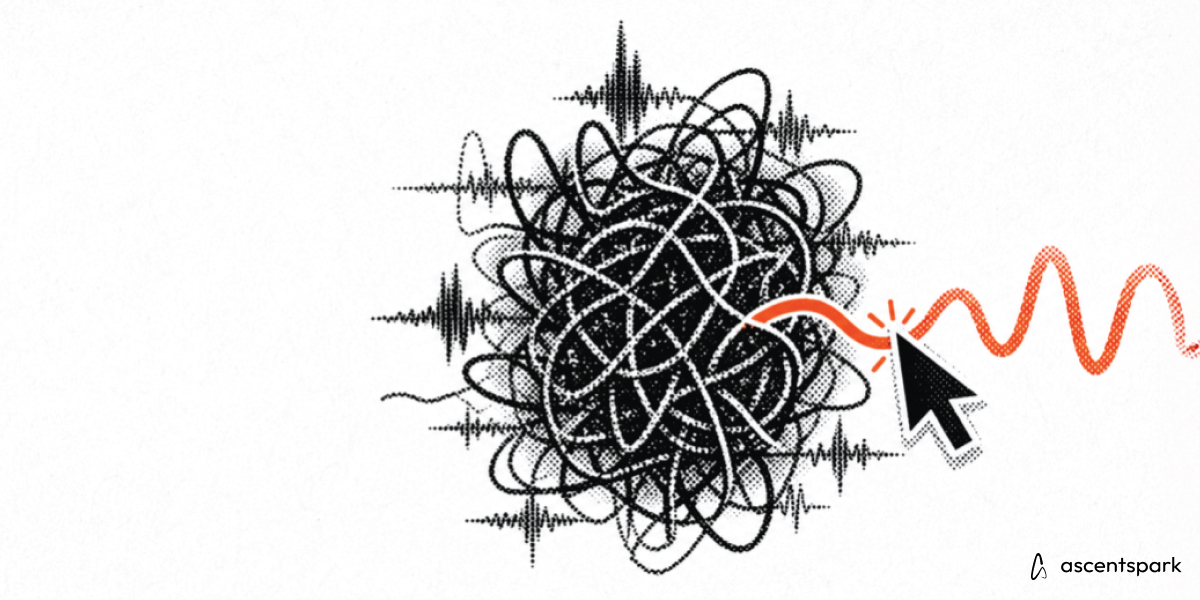
Every code generation tool you've used until now has written code the way a nervous student writes an exam: one word at a time, left to right, committed to each choice before knowing what comes next. That constraint is baked into how autoregressive models work, and for a long time it was just accepted as the price of the technology.
ByteDance-Seed's Stable-DiffCoder-8B-Instruct, published on Hugging Face on 15 January 2026, takes a different approach entirely. It's a diffusion-based code model, and the difference in how it generates output isn't just a technical footnote. It changes something fairly fundamental about what a coding assistant can do.
Autoregressive models, the family that includes GPT-4, Codex, and most of the tools powering Copilot and Cursor, generate tokens sequentially. Token one is fixed. Token two depends on token one. Token three depends on both. By the time the model reaches the closing brace of your function, every earlier decision is locked in.
This creates a structural awkwardness that anyone who's used these tools will recognise. The model commits to an implementation strategy at the first token and then has to follow that strategy all the way through, even when it becomes clear midway that a different approach would be cleaner. It can't look at the whole function, decide it's gone in the wrong direction, and revise the opening lines. It can only continue.
The analogy I find useful: it's the difference between a scribe copying text from left to right versus a sculptor roughing out a shape and then refining it. The scribe can't easily revise the first sentence once the second is written. The sculptor is always working the whole piece.
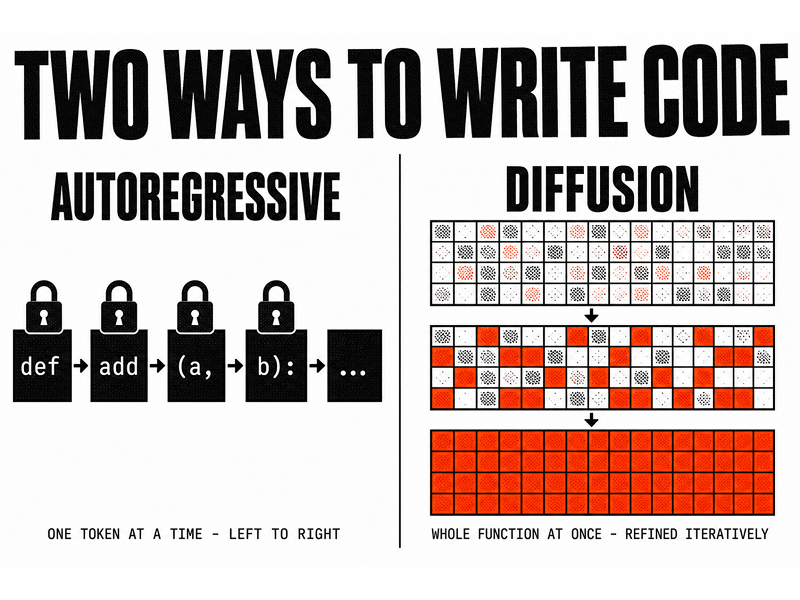
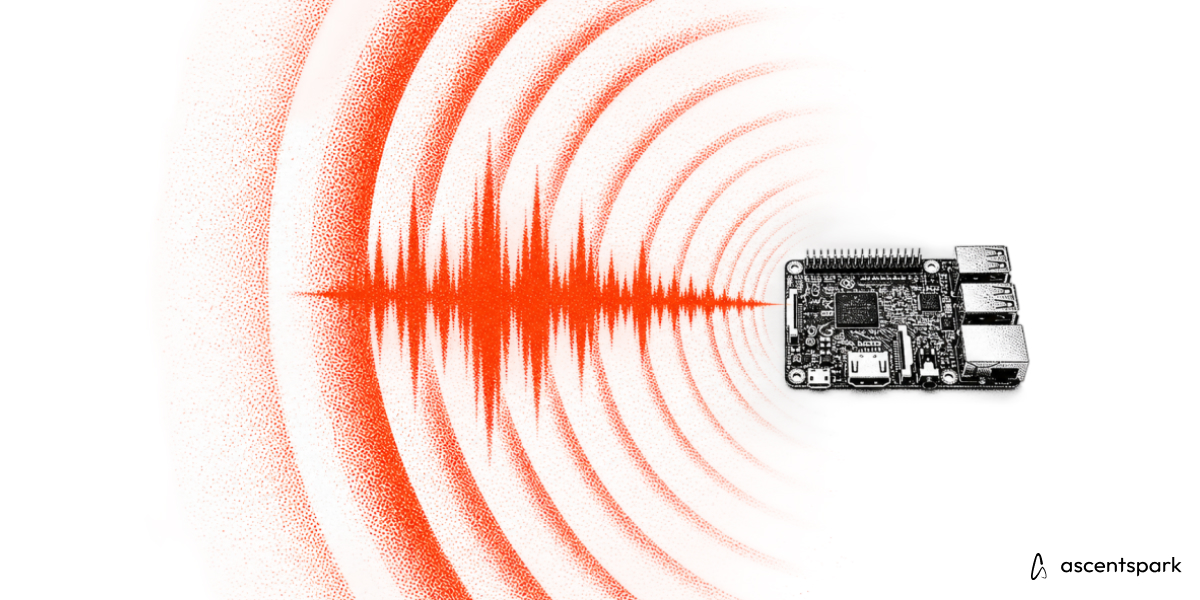
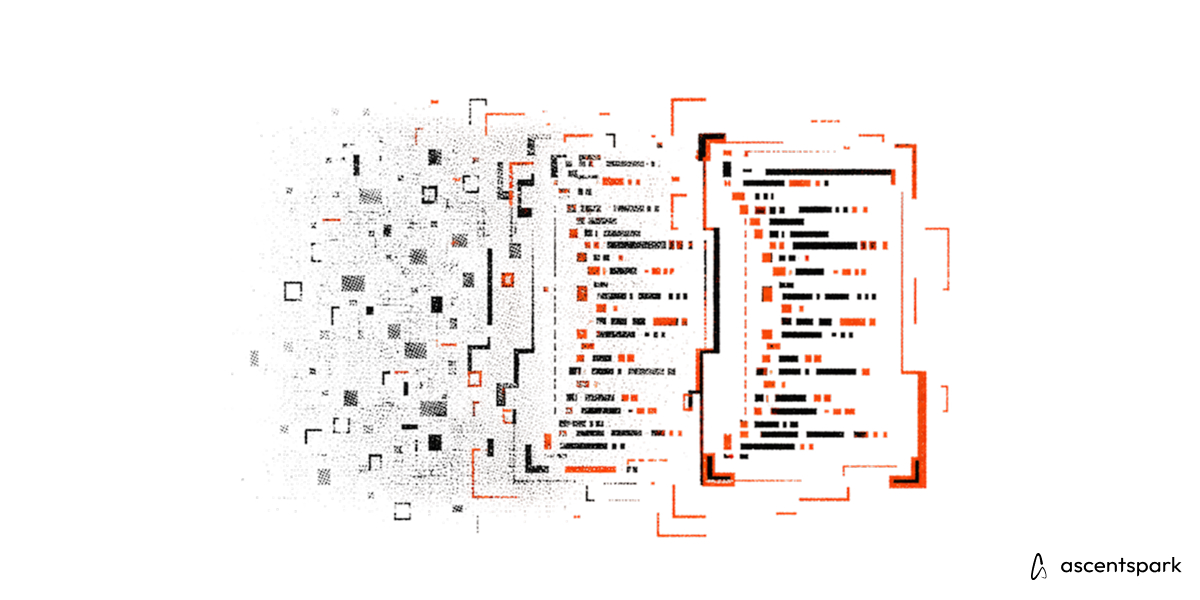
Diffusion language models don't start from nothing and build forward. They start from a rough, noisy, or masked version of the entire output and refine it over multiple passes. The model sees the whole function at once, even in its initial uncertain state, and iteratively moves every part of it toward a coherent solution simultaneously. It isn’t generating the function in one magical step. It still performs multiple refinement iterations internally; the difference is that every iteration has visibility over the entire function instead of just the next token.
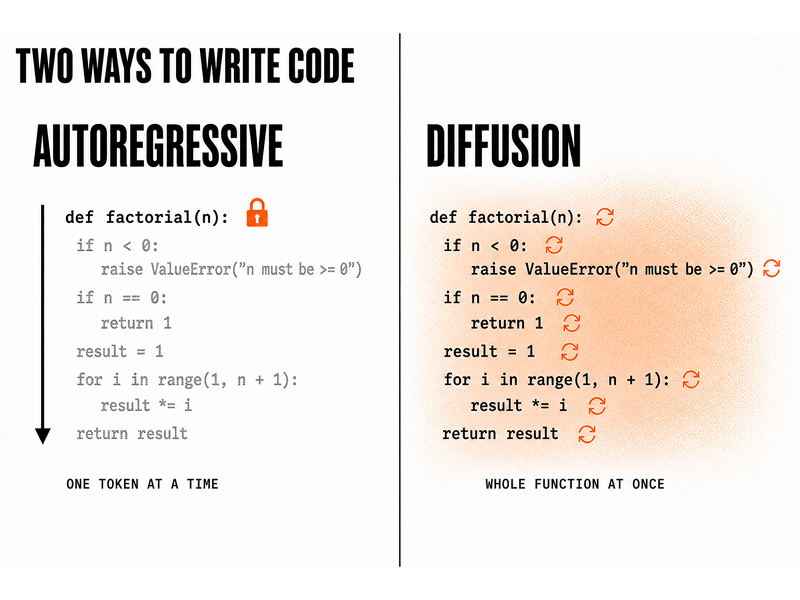
For code specifically, this matters more than it might for prose. Code has hard structural constraints: a variable referenced on line 12 needs to have been declared somewhere above it, a return type needs to match the function signature, loops need to close, conditions need to be reachable. A model that can see and revise the whole function during generation is better positioned to satisfy those constraints globally rather than locally.
I find the mental image genuinely useful here. Autoregressive generation is a one-way street. Diffusion generation is more like editing a draft where every sentence is visible and revisable at once.
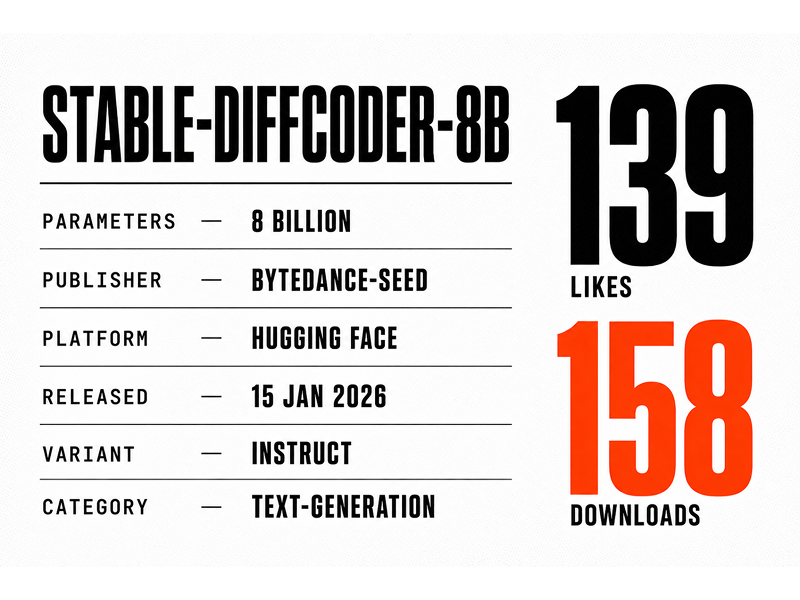
The model is an 8-billion-parameter instruct variant, categorised as text-generation on Hugging Face, published under ByteDance-Seed. At the time of writing, it had 139 likes and 158 downloads on the platform, which places it early in its adoption curve. That's not a criticism; it's a January 2026 release and the numbers will move.
The instruct variant designation matters. It means the model has been fine-tuned to follow natural-language instructions, so you're not working with a raw base model that needs careful prompting scaffolding. You can say "write a function that parses this JSON structure and handles missing keys gracefully" and expect the model to treat that as a directive rather than a text-completion seed.
What the public model card doesn't give us, at least not in detail, is a full breakdown of the specific diffusion mechanism. Whether this sits closer to masked diffusion or continuous diffusion architectures is worth understanding if you're integrating it deeply, and I'd recommend reading the ByteDance-Seed research output as it becomes available rather than assuming based on the name alone.
If you're trying to ship an MVP quickly, or you're managing a small dev team and wondering how AI tooling fits in, the honest answer is: not yet as a primary tool, but worth watching closely.
Here's my thinking. The gap between "this model exists on Hugging Face" and "this model is production-ready in my IDE" involves integration work, latency considerations, and enough independent benchmarking to know where it genuinely outperforms the autoregressive alternatives. None of that independent benchmarking exists yet in any trustworthy form for a model this new. I'm not going to quote numbers I can't verify.
What I would say is this: the architectural shift is real. Diffusion-based code generation isn't a marginal improvement to existing techniques, it's a different generation strategy. If the quality holds up under rigorous evaluation, the implications for tasks like function infilling, refactoring, and constraint-heavy code generation are genuinely significant.
For founders who've been burned by maintenance costs after custom builds, or who spent months trying to learn to code only to find it swallowed their time whole, the promise here is better AI-assisted development that produces more coherent code with fewer structural errors. Whether this specific model delivers on that promise at the quality level needed for production use is something we'll know more clearly in the months ahead.
In my view, the more important question isn't whether Stable-DiffCoder-8B beats Copilot on a specific benchmark today. It's whether diffusion-based code generation as a category produces output that's structurally sounder, especially for non-trivial functions with interdependencies. The architecture gives it a meaningful shot at doing exactly that.
If you're a developer curious about the model, pull it from Hugging Face, run it on functions you know well, and form your own opinion. 158 downloads tells you the community is still sizing this up and your early evaluation is genuinely useful signal.
If you're a founder evaluating AI-powered dev tools for a build, I wouldn't restructure your stack around any single new model right now. What I would do is track how diffusion code models perform over the next two to three quarters. The autoregressive generation approach has had a long run as the default. That's starting to change, and the tools that incorporate the next generation of code generation architectures will likely be worth a serious look when the independent benchmarks catch up.
What is Stable-DiffCoder-8B and who made it? It's an 8-billion-parameter diffusion-based code generation model published by ByteDance-Seed on Hugging Face on 15 January 2026, in an instruct-tuned variant designed to respond to natural-language coding instructions.
How is diffusion-based code generation different from tools like Copilot? Copilot and similar tools generate code token by token, left to right, committing to each choice before seeing what comes next. Diffusion models start from a rough version of the whole output and refine it iteratively, which means they can adjust early decisions in light of later constraints.
Does this model outperform existing coding assistants? No independent benchmark comparisons exist yet for a model published in January 2026, so any specific performance claim would be premature. The architectural approach is theoretically well-suited to structurally complex code, but that needs rigorous evaluation to confirm.
Is this ready to use in production? The model is available on Hugging Face and the instruct variant is usable, but integrating it into a production development workflow requires latency testing, IDE tooling, and enough real-world evaluation to know where it's genuinely stronger than existing options. It's worth experimenting with now and watching closely over the next few quarters.
Why does this matter for software built to solve business problems? Better code generation that can reason about a whole function simultaneously has the potential to reduce structural bugs and the kind of technical debt that drives up maintenance costs on custom software builds. That's the direction this architecture points in, even if the production-grade proof is still arriving.